- The Bitcoin Compass 🧭
- Posts
- Today's Top Crypto Headlines:
Today's Top Crypto Headlines:
Strait of Hormuz Blockade | Justin Sun vs. WLFI | Iran’s Digital Toll | Binance Workforce Relocation and more...
In partnership with

Good Morning Crypto Enthusiasts!
Glad to have you back for another edition of the UseTheBitcoin.com newsletter.

Strait of Hormuz Blockade: Trump’s Strait of Hormuz blockade is boosting Bitcoin as a “digital gold” hedge. Rising oil prices and geopolitical instability are accelerating Bitcoin’s adoption – a clear signal of systemic vulnerabilities. Expect more volatility and a potentially critical role for Bitcoin.
Justin Sun vs. WLFI: Justin Sun’s WLFI imploded due to flawed governance and potential insider trading, exposing dangers within DeFi. The blame game distracts from the core issue – a project’s collapse is a PR nightmare with potential ripple effects.
Iran’s Digital Toll: Iran’s crypto tolls are bypassing international banking restrictions, securing a lifeline and representing a dangerous escalation. Trump's "joint venture" proposal highlights desperation and the changing financial landscape – a risky game with high stakes.
💡Feature of the Day - Binance Workforce Relocation: Binance’s relocation of its UAE workforce signals a strategic retreat due to regional conflict instability. This "Great Crypto Migration" highlights geographic diversification risks and accelerating asset protection efforts.
All this and more in today’s headlines!
1,000+ Proven ChatGPT Prompts That Help You Work 10X Faster

ChatGPT is insanely powerful.
But most people waste 90% of its potential by using it like Google.
These 1,000+ proven ChatGPT prompts fix that and help you work 10X faster.
Sign up for Superhuman AI and get:
1,000+ ready-to-use prompts to solve problems in minutes instead of hours—tested & used by 1M+ professionals
Superhuman AI newsletter (3 min daily) so you keep learning new AI tools & tutorials to stay ahead in your career—the prompts are just the beginning
📰 News Highlights:
Trump’s blockade of the Strait of Hormuz triggered a chaotic chain reaction, and Bitcoin is proving to be the unexpected beneficiary. A surge in oil prices and a renewed faith in Bitcoin as a ‘digital gold’ hedge against geopolitical instability is seeing the asset climb.
This isn't just a short-term panic; it's a fundamental shift in how Bitcoin is perceived – a safe haven in times of escalating global conflict. Frankly, it’s a testament to the asset’s resilience, and a sobering reminder of the vulnerabilities in the traditional financial system.
The fact that this is happening during a conflict with Iran—specifically, a blockade driven by a perceived threat to global oil supplies—is a pivotal moment. It’s a validation of Bitcoin’s appeal as a decentralized, censorship-resistant asset, and it’s a significant acceleration of the asset's long-term adoption narrative. Let's be blunt: things are going to get messier, and Bitcoin's role in the coming weeks and months could be critical.
Justin Sun's foray into DeFi has spectacularly imploded, exposing deep cracks within the World Liberty Financial (WLFI) protocol. The collapse of the protocol highlights the dangers of concentrated voting power and the potential for insider trading within the decentralized finance space.
The discovery that WLFI wallets were using their own tokens as collateral is a red flag—a reminder that even seemingly well-intentioned projects can quickly unravel under pressure.
The blame game—Sun accusing the platform of rigged votes, and WLFI defenders arguing about “anchor borrower” strategies—is a distraction from the core issue: a flawed governance structure and a lack of transparency.
The Trumps’ foray into DeFi has turned into a PR nightmare, showcasing how even family-led investments can be easily manipulated. The clock is ticking on WLFI—and the consequences of its failure could reverberate throughout the DeFi ecosystem.
Iran’s decision to demand Bitcoin tolls for shipping through the Strait of Hormuz is a brazen and increasingly effective move. Utilizing the borderless nature of cryptocurrency, the sanctioned state is bypassing international banking restrictions and securing a potential lifeline—a strategy that has seen a surge in crypto flows into Iran. The potential revenue is astronomical and the actions are deeply troubling.
President Trump’s unexpected suggestion of a "joint venture" highlights the desperation on both sides – Iran seeking economic relief, and the US grappling with how to respond to a completely unorthodox challenge.
The risk of escalation remains high, and the situation is a dangerous game of brinkmanship. It's a stark reminder that the financial landscape is changing rapidly, and that traditional rules don't always apply.
💡 Feature of the Day:
Binance’s relocation of its UAE workforce signals a critical shift in the crypto landscape—a recognition that Dubai’s stability is no longer a given. The escalating regional conflict has forced a major player to acknowledge its vulnerabilities and adapt to a new reality.
While Binance remains committed to its regulatory framework in Abu Dhabi, the move to Hong Kong, Tokyo, Kuala Lumpur, or Bangkok demonstrates a strategic retreat to safer ground.
This “Great Crypto Migration” – driven by conflict and uncertainty—is accelerating, and Binance’s move is just the beginning. The situation highlights the inherent risks of operating in politically unstable regions and underscores the increasing importance of geographic diversification for crypto businesses. It’s a race to secure assets and talent before the next shockwave hits.
😂 Crypto Meme of the Day:
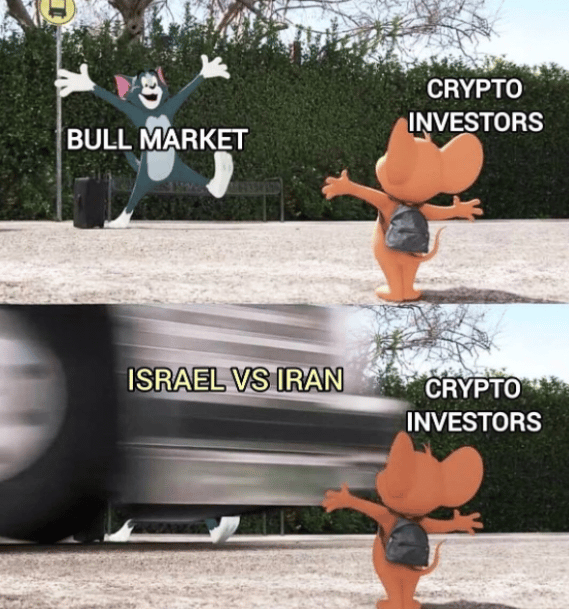
Meme of the day provided by @cryptomemebot
And that’s it for this today.
See you all tomorrow’s edition!
Jonathan Gibson
UseTheBitcoin.com